Mycotoxins are a common problem for all livestock industries. But the effects of these toxins and the ways to protect against them are not universal. What works for a cow may be less effective for a pig or poultry. Different GI tracts – different risks
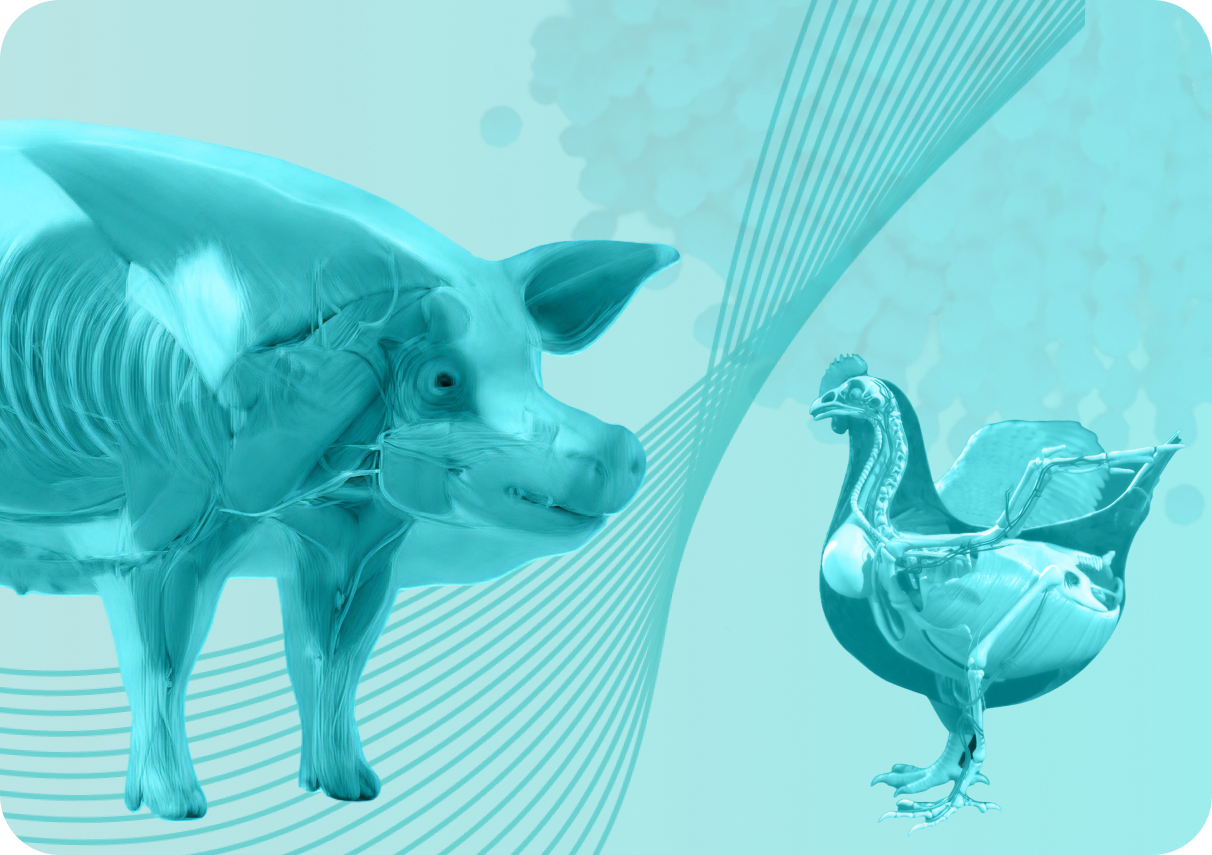
Cattle have a complex, multi-chambered digestive system. Mycotoxins can enter the milk, making it unsafe for humans. They also cause digestive problems, bleeding, poor feed absorption, and reproductive dysfunction.
Pigs have a more sensitive gastrointestinal tract: mycotoxins are quickly absorbed, suppress growth and reproductive functions. They can also cause lung problems, pneumonia, mouth ulcers, and loss of appetite.
In birds, due to their short digestive tract, toxins act rapidly - egg production decreases and immunity weakens.
So each type of animal needs its own defense strategy.
How UniXorb works for different species
UniXorb technology is designed to work effectively in a variety of gastrointestinal conditions. It is not "tuned" for one type of animal, but adapts to the specifics of the gastrointestinal tract: it stably binds key mycotoxins at different stages of digestion, helps to eliminate them from the body and increases immunity.
UniXorb works with the simultaneous presence of multiple toxins in feed, which is critical in real farms where a mixture of toxins is the norm, not the exception.
This is what allows UniXorb to be used in cattle diets, pig farming, and poultry farming – with predictable results.
Practice, not theory
Dairy farms have reported an increase in milk yields of up to 14% and an improvement in the immune system after implementing UniXorb.
In pig farming - improvement of average daily gain by an average of up to 14% and increased resistance to pathogenic microorganisms.
In poultry, there is an improvement in average daily gain by an average of up to 10% and a reduction in food poisoning.
How to get the most out of it
UniXorb gives the best results when the farmer takes into account the type of animal, the productivity group and the overall condition of the feed base. Regular feed control, correct dosage and systematic use are the key to protecting each livestock group.
Because in the fight against mycotoxins, universal solutions do not work, but those that take into account real differences between animals.