


Unixorb
An effective solution for reducing toxic load in animals
Mycotoxin control in agricultural animal and poultry diets. Stable growth, gut health, and risk reduction with feed toxins

Innovative formula

Protection against mycotoxins

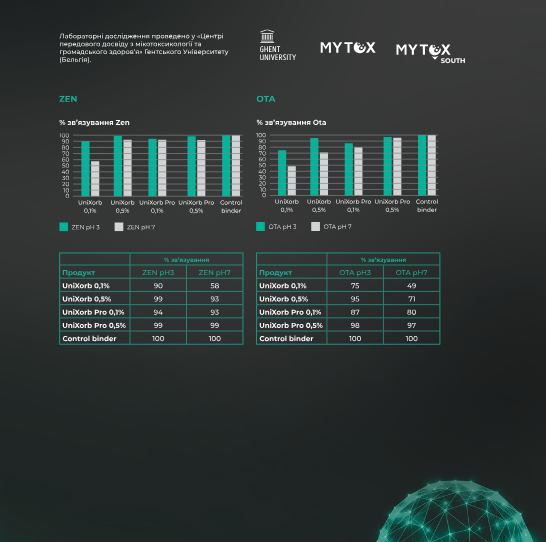
Laboratory test

Natural raw materials
Functional action

Gut protection |
Maintains the integrity of the intestinal mucosa under mycotoxin exposure. Reduces their negative impact on nutrient absorption and helps prevent digestive disorders and diarrhea. |

Performance Stabilization |
Contributes to maintaining growth, egg production, and feed conversion by reducing toxic load and normalizing feed intake |

Liver and immunity support |
Reduces the burden on the liver as a key detoxification organ and helps prevent immunosuppression, increasing animals' resistance to diseases |


Effects of myotoxins on animals
Mycotoxins are one of the most underestimated factors contributing to losses in livestock and poultry farming, as feed often contains several toxins simultaneously that enhance each other's effects. They affect the liver, kidneys, intestines, and immune system, leading to reduced feed intake, impaired growth rates, reproductive disorders, and increased susceptibility to infections. Young and highly productive animals are particularly vulnerable, often experiencing hidden chronic mycotoxicosis without overt symptoms. As a result, farms face not only clinical manifestations but also significant economic losses due to underproduction and decreased production efficiency.

Metabolism
- Liver disease
- Nervous phenomena
- Organ hyperplasia
Immunity
- Decreased vaccination effectiveness
- Decreased antibodies and macrophages
- Immunosuppression
Reproductive function
- Hypogalactia and agalactia
- Non-viable offspring
- Nymphomania is infertility.
- Small offspring
Productivity
- Refusal of food
- Increased mortality
- Decreased average daily weight gain
- Manifestations of diarrhea

Metabolism
- Hepatitis / hepatosis
- Anemia and enteritis
- Nervous phenomena
- Organ hyperplasia and hypoplasia
Productivity
- Decreased appetite
- Increased mortality
- Decreased average daily weight gain
- Manifestations of diarrhea
Immunity
- Decreased vaccination effectiveness
- Leukopenia
- Change in blood elements
- Immunosuppression
Egg production
- Decreased egg production
- Decrease in egg mass
- Decline in eggshell quality
- Embryonic mortality

Innovative approach and technologies
Adsorption and binding
Maximum adsorption of polar mycotoxins due to a complex of unique modified clays. Binding of non-polar mycotoxins and enhancement of immune system function through the use of triple-layered adsorbents and polysaccharides
Protection and support of organs
Restoration and maintenance of liver, kidney, and pancreas function through the action of carefully selected blends of substances with hepatoprotective and anti-stress effects
Biotransformation of mycotoxins
Effectively binds a wide range of mycotoxins in the digestive tract, limiting their absorption
Immune Response Support
Reduces the immunosuppressive effects of mycotoxins, helping to preserve the body's natural defense mechanisms. Supports stable immune reactivity in animals under stress and production conditions.


Mycotoxin control strategy in feeding
Threat detection
- Feed and raw material quality control
- Analysis of storage conditions
- Animal impact assessment
UbiХorb as a solution
- Mycotoxin Adsorption and Binding
- Digestive System Support
- Reducing the toxic load
Impact on performance
- Better feed digestibility
- Consistent production performance
- Economic efficiency


Reviews about our products

Most popular questions
Which mycotoxins does UniXorb control, and why is this important?
UniXorb is designed to control a wide range of the most common and dangerous mycotoxins, including aflatoxins, zearalenone, deoxynivalenol (DON), ochratoxins, fumonisins, and T-2 toxin. In real-world conditions, feed rarely contains only one toxin—more often, it's a combination of several, which can enhance each other's effects (synergistic effect), significantly complicating risk control.
That is why an effective adsorbent must work comprehensively: not only binding polar toxins but also affecting non-polar ones and reducing their bioavailability in the digestive tract. This is critical for maintaining productivity, immunity, and the overall condition of animals, even in cases of hidden (subclinical) mycotoxicosis.
How does UniXorb affect animal performance and farm economics?
Mycotoxins primarily affect economic indicators rather than obvious symptoms: reduced weight gain, milk yield, impaired feed conversion, reproductive problems, and increased morbidity. Often, these losses go unnoticed, but collectively they lead to significant lost profits.
The use of UniXorb helps stabilize feed intake, reduce the toxic load on the body, and support physiological processes that directly impact productivity. As a result, farms achieve more predictable production indicators, reduced losses, and improved profitability.
How does UniXorb work in the animal digestive tract?
Once ingested, UniXorb acts directly in the gastrointestinal tract, where it binds mycotoxins and limits their absorption into the bloodstream. This reduces their toxic effects on the liver, immune system, and other organs.
In addition to adsorption, the product supports intestinal barrier function and helps stabilize the microbiome. This comprehensive approach not only neutralizes toxins but also reduces the secondary effects of their action—inflammatory processes, digestive disorders, and immune suppression.
How to choose the correct UniXorb dosage?
Recommended dosage is 0.5-3 kg per ton of product.
The dosage of UniXorb depends on the risk level of feed contamination, animal species, and the farm's production goals. Under standard conditions, a basic prophylactic dose is applied to control background mycotoxin levels.
In cases of increased risk (use of silage, grain of questionable quality, change of feed suppliers), the dosage may be adjusted. That is why it is important to approach the application not formally, but considering the specific conditions of the farm — this ensures maximum product effectiveness.
You can contact our specialists for a free consultation to get additional advice
What makes UniXorb different from other adsorbents on the market?
Most traditional adsorbents primarily target specific groups of mycotoxins, which limits their effectiveness in real-world conditions of multicomponent feed contamination. UniXorb employs a comprehensive approach, combining adsorption with support for detoxification organs and the immune system.
The product's effectiveness is confirmed by laboratory research, and its production complies with the GMP+ standard, guaranteeing quality and safety control at all stages. This allows UniXorb to be used as a reliable tool in the mycotoxin risk management system in modern animal husbandry.
Agrosupply
15 years of experience
15 years of experience. Own production. 1500+ tons annually. We create feed solutions based on science, experience and trust.
Learn more


